English
 Arabic
 Turkish
 French
 Russian
 German


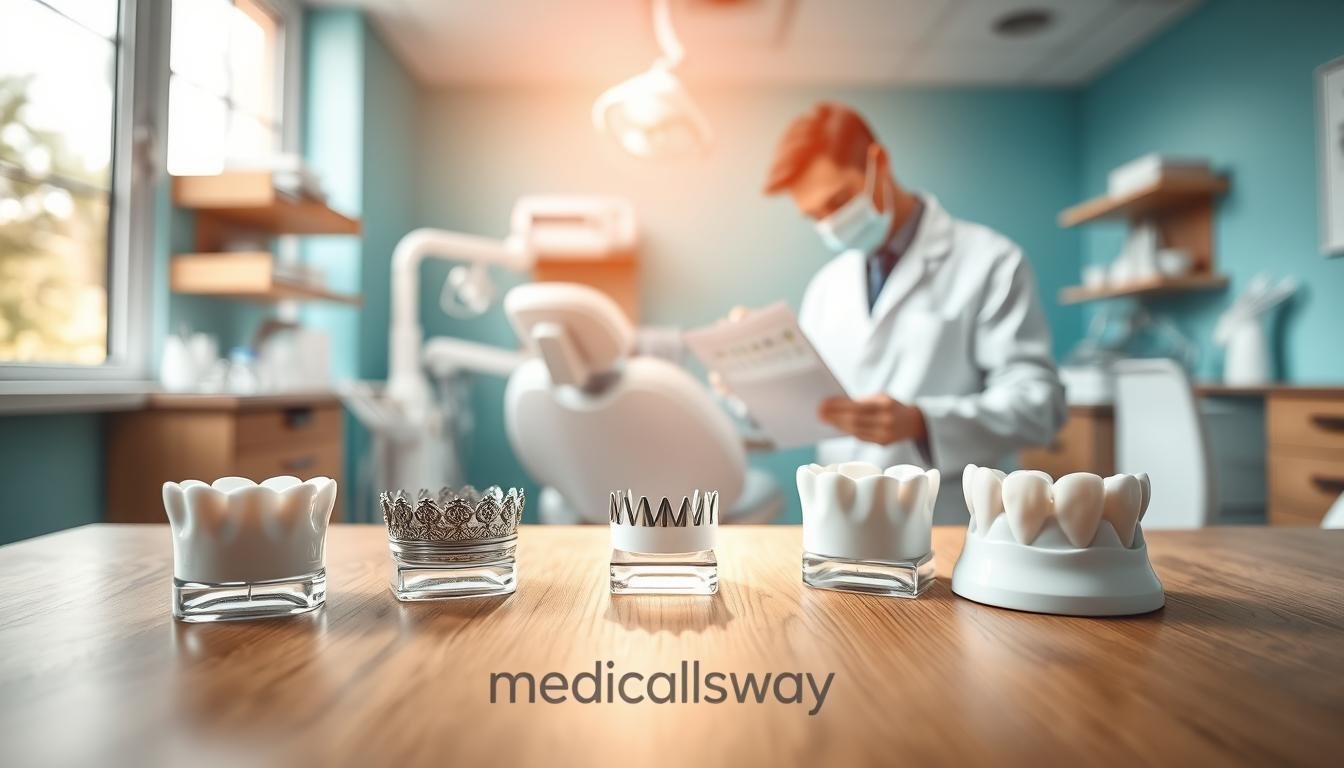
Discover Types of Dental Crowns and Cost Options
- 2025-12-20 18:24:03
- Dental Tourism
Discover Types of Dental Crowns and Cost Options
MedicalsWay — Your Bridge to Better Health. We stand beside you as a trusted guide when you need a reliable solution for a worn or damaged tooth. This brief guide helps you compare choices, prices, and what to expect so you can plan with confidence.
A crown restores the visible part of a tooth to shape, size, strength, and appearance. We explain common materials like porcelain, metal, and resin, and show national averages so surprises are rare. Our aim is clear: affordable quality care that fits your smile goals.
We outline the treatment steps from consult to final placement, and offer practical aftercare tips. If insurance, copays, or financing matter to you, we explain options and how MedicalsWay can connect you with trusted clinics and dentists worldwide.
Key Takeaways
-
Learn what a dental crown does and when it’s recommended.
-
See national price averages to help budget wisely.
-
Compare common materials and their pros and cons.
-
Know the treatment steps and simple recovery tips.
-
Find how insurance and financing can lower out-of-pocket costs.
MedicalsWay — Your Bridge to Better Health
MedicalsWay links you to trusted clinics and dentists so your care feels clear and supported. We partner with verified providers worldwide to deliver affordable quality and safety at every step.
From second opinions to scheduling, we simplify the treatment journey. We gather records, coordinate imaging, and keep follow-ups on track so details don’t slip through the cracks.
Want a local dentist or prefer care abroad? We help you compare credentials, timelines, and total cost estimates. We also clarify likely insurance coverage and out-of-pocket options up front.
"With MedicalsWay, you don’t just book an appointment—you gain a trusted partner for your entire care journey."
We verify infection control, modern technologies like digital impressions, and high-strength materials used for crown work. Our team advocates for your health outcomes, comfort, and budget so your smile and timeline align with your goals.
What is a dental crown and when do you need one?
A dental crown (cap) covers the entire visible part of a natural tooth to restore shape, size, strength, and appearance.
We stand beside you with clear, jargon-free explanations so you can decide confidently with your dentist.
Dental crown (cap) explained: restoring shape, strength, and appearance
A crown is a custom-made cap that fits over a weakened or broken tooth. It surrounds the tooth 360 degrees to restore function and protect the remaining tooth structure.
Crowns blend form and function. They can match shade and translucency so the appearance fits your smile goals.
Common reasons to get a crown
Your dentist may suggest a crown when a tooth has a very large filling, a fracture, severe wear, or active decay near the root.
Crowns also protect teeth after a root canal, cover implants, anchor bridges, and improve the look of misshapen or discolored teeth.
"A well‑placed crown lets you chew comfortably while guarding the tooth from further breakage."
We’ll help you discuss materials, timelines, and next steps with your dentist so the treatment fits your needs.
Types of dental crowns and cost
Choosing the right crown means weighing appearance, durability, and budget for the tooth in question.
All-porcelain / all-ceramic
Best for front teeth: these match natural teeth with excellent translucency. National porcelain averages sit near $1,399 (roughly $915–$3,254).
Zirconia
High strength with a tooth-colored look: great for back teeth that face heavy chewing. Plan for about $1,500–$3,000 depending on design and location.
PFM and all-metal
PFM (porcelain-fused-to-metal) blends strength and appearance at moderate prices (avg ~$1,114; range ~$770–$2,454).
All-metal (gold/alloys) lasts long on molars. Typical metallic averages are around $1,211 (range ~$821–$2,861); gold options often start near $800–$1,500.
Temporary, stainless steel, and resin
Short-term solutions: stainless steel (mostly pediatric) runs about $300–$700. Resin or composite crowns are budget-friendly ($400–$800) but wear faster.
Temporary crowns protect the prepared tooth while the lab makes your permanent crown; prices commonly fall between $200 and $700.
"We’ll lay out options with clear pros, cons, and prices so you can choose the right solution without stress."
Tip: when comparing crowns cost, balance appearance and strength against how long you want the restoration to last. We’re here to help you match the right material to your needs.
Dental crown procedure: from consultation to permanent placement
From first exam to final cementation, here’s a clear roadmap for your crown procedure. We make each step manageable and can coordinate timelines to fit your schedule.
First visit: exam, anesthesia, tooth preparation, impressions and shade
Your dentist will examine the tooth, take X-rays, and confirm the plan. Local anesthesia keeps you comfortable while the tooth is reshaped and any decay is removed.
Impressions (traditional or digital) and a shade match are taken so the lab can craft the right fit and material. A temporary crown is placed to protect the tooth while the permanent crown is made.
Temporary crown: purpose, sensitivity, and short-term care
A temporary crown lets you eat and speak while you wait. Mild sensitivity to hot or cold is common. Avoid sticky or very hard foods and chew on the opposite side when possible.
Second visit: fit, bite adjustment, and cementing your permanent crown
At the follow-up the temporary is removed, the permanent crown is tried in, and bite adjustments are made. Your dentist will cement and polish the crown so it blends with neighboring teeth.
If the restoration follows a root canal, the steps are similar; the final crown protects the treated tooth from fracture. We’ll help schedule lab work and visits to minimize time in a temporary crown.
Recovery, durability, and care for your new crown
Recovery after a crown placement usually moves quickly when you follow a few practical habits. Mild sensitivity to hot, cold, or pressure is common and often eases in days.
Use over-the-counter pain relievers and eat soft foods for 24–48 hours. Avoid sticky sweets and hard bites while your bite settles; a temporary crown can come loose with chewy candy or nuts.
How long restorations last
With careful care, most crowns last 5–15 years. Many reach around 10 years when brushing, flossing, and habits protect the restoration and the underlying tooth from decay.
Oral hygiene tips to protect the restoration
Brush twice daily with fluoride toothpaste and floss gently around the margin. Consider an antibacterial rinse if your dentist recommends it.
If you grind or clench, ask about a night guard to preserve strength and prevent wear on the crown and your natural teeth. Regular checkups catch small fit issues before they become bigger problems.
"Caring well for your crown supports oral health and keeps your smile looking and feeling its best."
We’re beside you through recovery and long-term care—simple routines protect your investment and comfort after the procedure.
Dental crowns cost in the United States today: materials, location, and insurance
We present clear price ranges and insurance notes so you know what to expect before visiting a dentist.
National averages by material
Porcelain: about $1,399 (range $915–$3,254). PFM: around $1,114 (range $770–$2,454).
Metal alloys: roughly $1,211 (range $821–$2,861). Resin/temporary: near $697 (range $488–$1,593).
Why location matters
High-cost markets can push prices above $2,000 for porcelain—California and Hawaii are examples. Low-cost states like South Dakota and Alabama average near $1,050.
Quotes usually exclude exams, X-rays, or added procedures. These extras change your total costs.
Insurance, copays, and financing
Insurance may cover part of a crown when it's medically necessary; cosmetic cases often aren’t covered. Expect deductibles, copays, and preauthorization rules.
Financing tools like CareCredit can cover expenses your plan does not. Ask your dentist for an itemized estimate by material so you can compare value, not just sticker price.
"We help you align budget, coverage, and timing—so your chosen crown fits both your smile and your plan."
How to choose the right crown for your tooth
Deciding which crown suits your tooth starts with where it sits in your mouth and what you need it to do. We’ll guide you through trade-offs so your final choice fits your smile goals, bite forces, and budget—without stress.
Front vs back teeth: balancing appearance, strength, and function
Front teeth prioritize appearance and translucency. For these, porcelain or high-translucency ceramics match natural teeth in color and light reflection.
Back teeth face heavy chewing. Zirconia or metal-based options offer extra strength and wear resistance while modern zirconia still looks natural.
Budget, oral habits, and tooth condition: matching material to your needs
If you grind or clench, ask your dentist about stronger materials and a night guard to protect the crown and opposing teeth.
PFM gives a solid middle ground—good durability with a tooth-colored exterior. Metal crowns remain the top pick for molars when longevity matters more than appearance.
On a tight budget or as a short bridge to a long-term solution, resin can work temporarily. Always weigh expected lifespan against initial price; a longer-lasting crown often saves money over time.
"We help you compare options side-by-side so your final choice matches your bite, smile goals, and budget."
Coordinating care and cutting costs with MedicalsWay
We make it easy to compare skilled dentists and verified labs across locations to match quality with value. Our team opens doors to top clinics so you can access affordable quality care without sacrificing safety.
Access top clinics and dentists globally for quality and affordability
We connect you with trusted providers worldwide and spotlight where modern materials and lab work offer the best value. That helps when you’re weighing a crown or seeking a reliable solution abroad or locally.
Streamlined scheduling, second opinions, and transparent pricing
We secure clear quotes that list materials, lab fees, and any added procedures so the full total is visible up front. Need confidence? We arrange second opinions that review X-rays, impressions, and the proposed treatment plan.
We also:
We coordinate scheduling to lower time in a temporary crown, align estimates with your insurance benefits, and verify sterilization, lab partners, and fabrication methods.
With MedicalsWay beside you, you gain an advocate who keeps records flowing, clarifies timelines, and ensures costs stay transparent from start to finish.
Conclusion
When you pair the right material with skilled care, your tooth can look and work like new.
You now know main materials, typical U.S. ranges, and how each choice balances appearance with strength. The process is simple: prepare the tooth, protect it with a temporary, then place and adjust the permanent crown.
With good habits and regular checkups, restorations help your teeth last for years. Insurance may cover part of the price, and financing can help bridge gaps in cost.
With MedicalsWay, it’s not just where you go—it’s who guides you. We match you with trusted providers, clear estimates, and schedules that fit your life. Ready to find the right crown and start treatment? Let’s get started.
FAQ
What is a dental crown and when might I need one?
A crown, sometimes called a cap, covers a damaged tooth to restore shape, strength, and appearance. You may need one after a large filling, a fracture, extensive decay, following a root canal, or to cap an implant. Crowns protect remaining tooth structure and help restore normal chewing and speech.
What are the main crown materials and how do they differ?
Common materials include all-ceramic (porcelain) for front teeth where appearance matters, zirconia for strong, natural-looking restoration on back teeth, porcelain-fused-to-metal (PFM) and full-metal crowns for maximum durability on molars, and temporary resin or stainless steel options for short-term protection. Each material balances appearance, strength, and price.
How does the crown placement procedure work?
On the first visit, we examine the tooth, take X-rays, numb the area, and prepare the tooth by removing decay and shaping it. Impressions and shade selection follow. You’ll receive a temporary crown. At the second visit, we fit, adjust bite, and cement the permanent crown. Appointments are straightforward and usually done by a general dentist or prosthodontist.
What should I expect during recovery after getting a crown?
Mild sensitivity and tenderness are common for a few days, especially to hot or cold. Over-the-counter pain relievers help. Avoid sticky or hard foods for a short time, and follow temporary crown care instructions. If you notice severe pain, swelling, or the crown feels loose, contact your dentist promptly.
How long do crowns typically last?
With good oral hygiene and regular dental checkups, crowns often last 10 to 15 years or longer. Lifespan depends on material, bite forces, oral habits like teeth grinding, and how well you care for surrounding gums and teeth.
Will my dental insurance cover a crown?
Many plans cover part of the crown cost, especially when it’s medically necessary. Coverage varies by insurer, plan limits, and whether the provider is in-network. Expect copays or percentage-based coverage and check benefits for waiting periods and annual maximums.
How much do crowns cost in the United States?
Prices vary by material and location. All-ceramic crowns often cost more for superior aesthetics, zirconia sits mid to high range for strength and look, PFMs and full-metal crowns can be less or more depending on metal used, and temporary or resin crowns are least expensive. City and state fees, lab fees, and whether you need a root canal or core build-up affect the final price.
Does the tooth need a root canal before placing a crown?
Not always. A crown is recommended when a tooth is weakened or has a large filling. A root canal is needed if the pulp is infected or irreversibly damaged. Sometimes a root canal is done first, then a crown placed to protect the treated tooth.
Should I choose porcelain, zirconia, or metal for my crown?
For front teeth, porcelain or all-ceramic gives the best match to natural enamel. For back teeth, zirconia offers excellent strength with good aesthetics. Metal or PFM crowns provide durability for heavy chewing. We’ll help you weigh appearance, budget, and function to choose the right material.
Can a crown fail, and how do I prevent problems?
Crowns can fail from decay at the margin, root issues, loosening of cement, or fracture from trauma. Prevent problems by brushing twice daily, flossing around the crown, avoiding hard chewing on that tooth, wearing a nightguard if you grind, and keeping regular dental visits.
What is a temporary crown and why is it needed?
A temporary crown protects the prepared tooth, maintains spacing, and preserves bite while the permanent crown is fabricated. It’s made of resin or stainless steel and requires gentle care—avoid sticky foods and use caution when flossing.
How does location affect pricing and options?
Fees differ by state, city, and clinic due to local lab costs, overhead, and provider expertise. Major metropolitan areas typically charge more. MedicalsWay helps patients compare verified clinics worldwide for affordable quality and transparent pricing if traveling for care.
Can MedicalsWay help me find an affordable, high-quality crown option?
Yes. We connect you with accredited clinics and experienced dentists, offer second opinions, transparent pricing, and assistance with scheduling and financing like CareCredit. We aim to make your treatment safe, affordable, and stress-free.
Are there special care tips for crowns on front teeth?
Front crowns need both aesthetics and gentle care. Avoid biting hard items, limit staining foods and drinks, and maintain excellent oral hygiene. If you notice discoloration at the gumline or looseness, see your dentist for evaluation.
What happens if a crowned tooth develops decay or infection later?
Decay under a crown or an infected root may require treatment such as crown replacement, root canal therapy, or in severe cases extraction and implant placement. Early detection through regular exams improves outcomes and can save costs long-term.